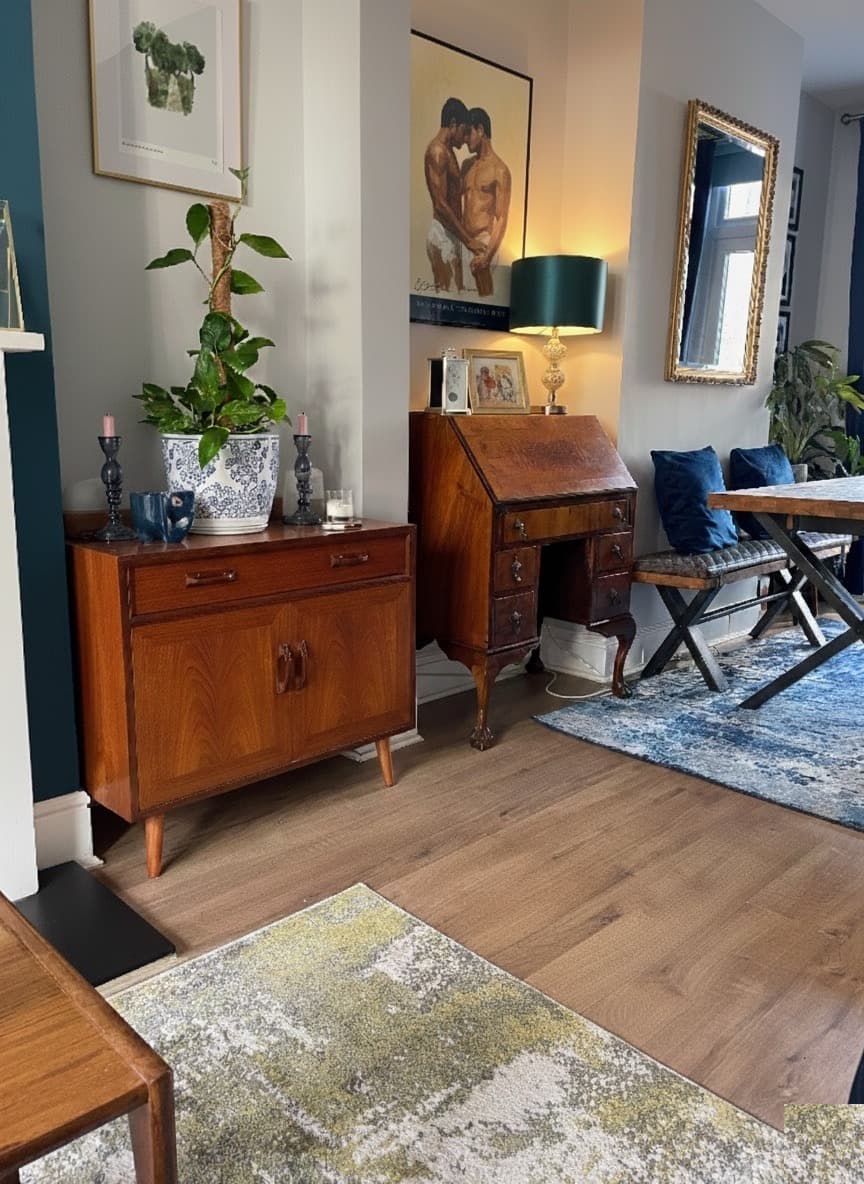
How to Mix Vintage and Modern Furniture Without It Looking Like a Mess
The homes I love most look like they've been put together over years, not ordered in one afternoon. A mid-century sideboard next to a contemporary sofa. A Victorian mirror above a modern console. An inherited dining table surrounded by chairs you found last month. That mix of old and new is what gives a space character. It's the difference between a room that looks decorated and one that feels lived in.
But I understand the hesitation. When you're standing in a vintage shop holding a 1960s teak cabinet, it's hard to picture it next to your IKEA bookshelf. Will it look intentional or just random? Here's how I think about it.
Find a common thread. It doesn't have to be style. It can be colour, material, or proportion. A brass lamp from the 1940s and a modern brass picture light have nothing in common aesthetically, but the material connects them. A chunky Victorian chest of drawers and a contemporary upholstered bed are different eras, but if they share a colour palette, they'll sit together naturally.
Let the vintage piece be the star. In most rooms, I'll use one or two vintage pieces as focal points and build the rest of the scheme around them. A hand-painted chinoiserie cabinet doesn't need to be surrounded by other antiques. Put it against a modern backdrop, a clean wall, simple flooring, and it becomes the most interesting thing in the room. The contrast is what makes it special.
Don't be too matchy. A room full of pieces from the same era and the same style can feel like a museum exhibit. The whole point of mixing is creating tension and interest. A sleek modern sofa next to a carved wooden side table creates a conversation between the pieces. That's what you want.
Scale matters more than style. The reason some vintage-modern mixes feel off isn't the era clash. It's that the proportions don't work. A delicate little Victorian occasional table next to a massive L-shaped sofa will look lost. Think about the visual weight of each piece and make sure they balance.
Refresh, don't restore. This is where upcycling comes in. Vintage furniture doesn't have to look vintage. I regularly take old pieces and give them new paint, new handles, new upholstery. The bones are vintage but the finish is fresh. A 1950s wardrobe painted in deep forest green with modern brass handles sits perfectly in a contemporary bedroom. It looks like a high-end designer piece because, well, it is now.
Start small if you're nervous. You don't need to fill your home with vintage on day one. Start with one piece. A lamp. A mirror. A side table from a local antiques market. Live with it for a while and see how it changes the feel of the room. I promise it will.
The homes that stay with you, the ones you walk into and think "this place has something," they're never all-new or all-old. They're a mix. And getting that mix right is one of my favourite things to do.